What to Put on a Comp Card: Photos, Measurements and Details

A comp card has very little room, and the person reading it has very little time. Every line you add either helps them picture you in a job or gets in the way. This guide goes through what belongs on the page, in the order a booker looks for it, and what is better left off.
If you are still deciding whether you need a card at all, read what is a comp card first. If you are ready to build one, how to make a comp card takes you through it step by step.

The order a booker reads a comp card in
People read a comp card in a predictable order, and your layout should follow it. First the main photo, because it answers the question of who you are. Then your name, so they know what to call you. Then the numbers, which tell them whether you fit what they are casting. Last, the contact details, so they can act.
That order is why a cluttered card fails. If the numbers are hard to find, a booker who is checking for a particular size gives up and moves to the next card. Put the most important thing first, make everything else easy to find, and remove anything that does not earn its place.
Photos: how many and which
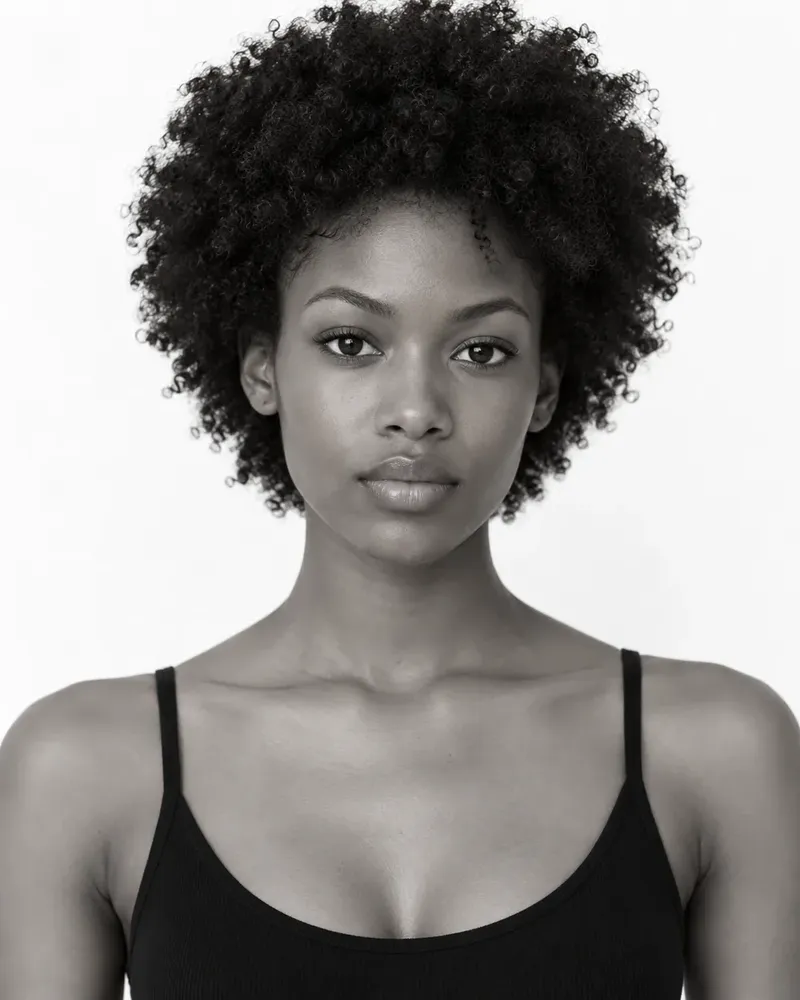
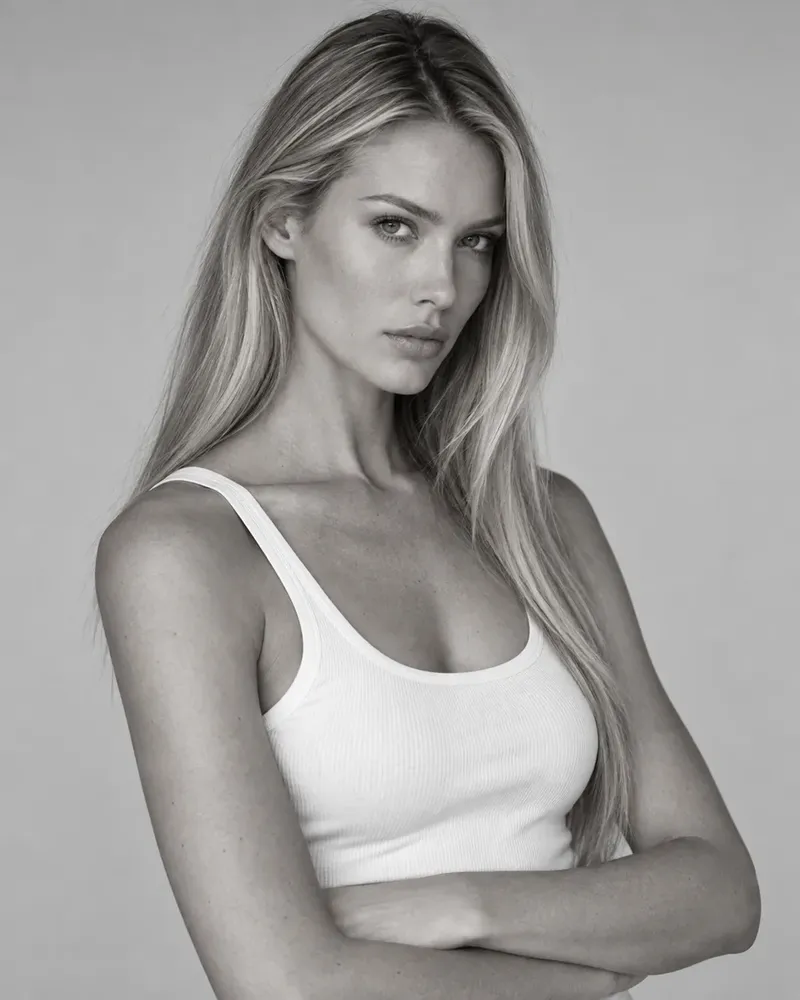
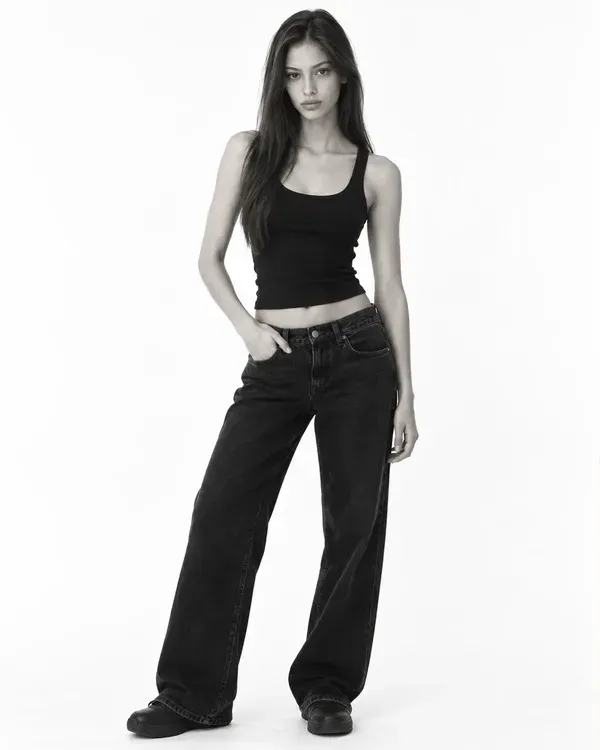
Use between four and six photos, all recent, all of you. A clean headshot, a full-length shot, a profile or three-quarter angle, and one image with more personality cover most needs. Put the strongest photo first and largest.
Do not repeat yourself. Two near-identical headshots use up space that a different angle would have used better. Do not mix wildly different looks without a reason: a card should look like one person on one day, unless you are applying for work that needs range.
The full guide to choosing them is in how to make a comp card, and the simplest and most honest kind of photo is covered in modeling digitals and polaroids.
Measurements for women's work
For women's fashion and commercial work the standard list is:
- Height. Barefoot, standing straight against a wall.
- Bust. Around the fullest part of the chest.
- Waist. Around the narrowest part of the torso, usually just above the navel.
- Hips. Around the fullest part of the hips and seat.
- Dress size. The size you actually wear, and say which country's sizing it is.
- Shoe size. Also with the country's sizing.
Say which units you are using. Centimetres are normal in most countries and inches in the United States, and a booker who guesses wrong may misread you by a lot. For how to take each measurement properly, see model measurements, explained.
Measurements for men's work
For men the list is slightly different, because the clothes being cast are different:
- Height.
- Chest. Around the fullest part of the chest.
- Waist.
- Inseam. From the crotch to the floor, along the inside of the leg.
- Suit or jacket size. Plus neck or collar size if you know it.
- Shoe size.
Some bookers also like to see sleeve length. If you know it, add it. If not, the list above is enough to start with.
Hair, eyes and the small details
Add hair colour and eye colour. They look trivial, but clients casting for a family, a brand or a particular look use them to filter. Give the colour you have today: if you dye your hair, say so, or change the card when you change the colour.
If you work in a field where other details matter, such as tattoos, special skills, languages or a driving licence, a single short line can help. Keep it to facts a booker would use.
Contact details and agency information
A card without a way to reach you cannot lead to a job. Give an email address you check every day. Add a phone number if you want to be called, but it is fine to leave it off if you would rather start by email.
If you are signed, put your agency's name and booking contact on the card, and take your own off. The agency handles bookings, and a client who contacts you directly puts you in an awkward position.
If you are not signed, a first name and surname, a city and one email address are enough. On FYND you can also tick a box to let agencies find your card, and agencies then contact you through FYND without ever seeing your email address.
Optional extras worth adding
A few extras are worth the space:
- Your city. Location is one of the first things a booker checks.
- Availability and travel. If you will be in another city soon, say when.
- A QR code. On a printed card or poster, it opens the digital version.
- Social handles. One or two, if the accounts are active and show your work. They are not a measure of how good you are.
- A short list of work. Only if it is real and relevant. A short honest list beats a long vague one.
What to leave off
Leaving things off is half the skill.
- Your date of birth. It is not needed, and it is safer private. FYND checks it to confirm you are 18 or older and never shows it.
- Your home address. A booker never needs it from a card.
- A long biography. One short line at most. Nobody reads a paragraph on a comp card.
- Prices and rates. Rates are discussed after a booker is interested.
- Filters and heavy retouching. They hide the thing the card exists to show.
- Decoration. Borders, clip art, watermarks and three different typefaces make a card look less professional, not more.
If you are unsure about something, ask whether a booker would miss it if it were gone. If not, leave it off.
A good comp card holds a few recent photos, honest numbers in clear units, a few small details and a way to contact you, in the order a booker reads them. Everything else is optional, and most of it is better left off. When you are ready to put yours together, build your free comp card.
To see everything FYND offers talent, visit the talent features page.
Frequently asked questions
Should I put my age on my comp card?
Most cards leave it off. Some countries and agencies list an age range or ask for the age separately, but the exact date of birth is not needed on the page, and it is safer not to publish it.
Should I put my follower count on my comp card?
Only if it helps the work you are going for. For influencer and social campaigns it is useful, and on FYND you can add an optional follower count. For fashion work it matters much less than your photos and your measurements.
Should I list my experience on a comp card?
If you have real, relevant work, a short list of two to four items is fine. If you have none yet, leave the space empty. A calm layout with nothing to prove looks better than padding.
Where should my agency's logo go?
Agencies usually add their own details when they make your card, so you do not need to add a logo yourself. If you are signed and making your own card, put the agency's name and booking contact where your own contact would go.
Do actors need the same details as models?
Not exactly. Actors usually add training, credits and special skills, and may leave out some measurements. The photos and a clear way to reach you matter in every field.